
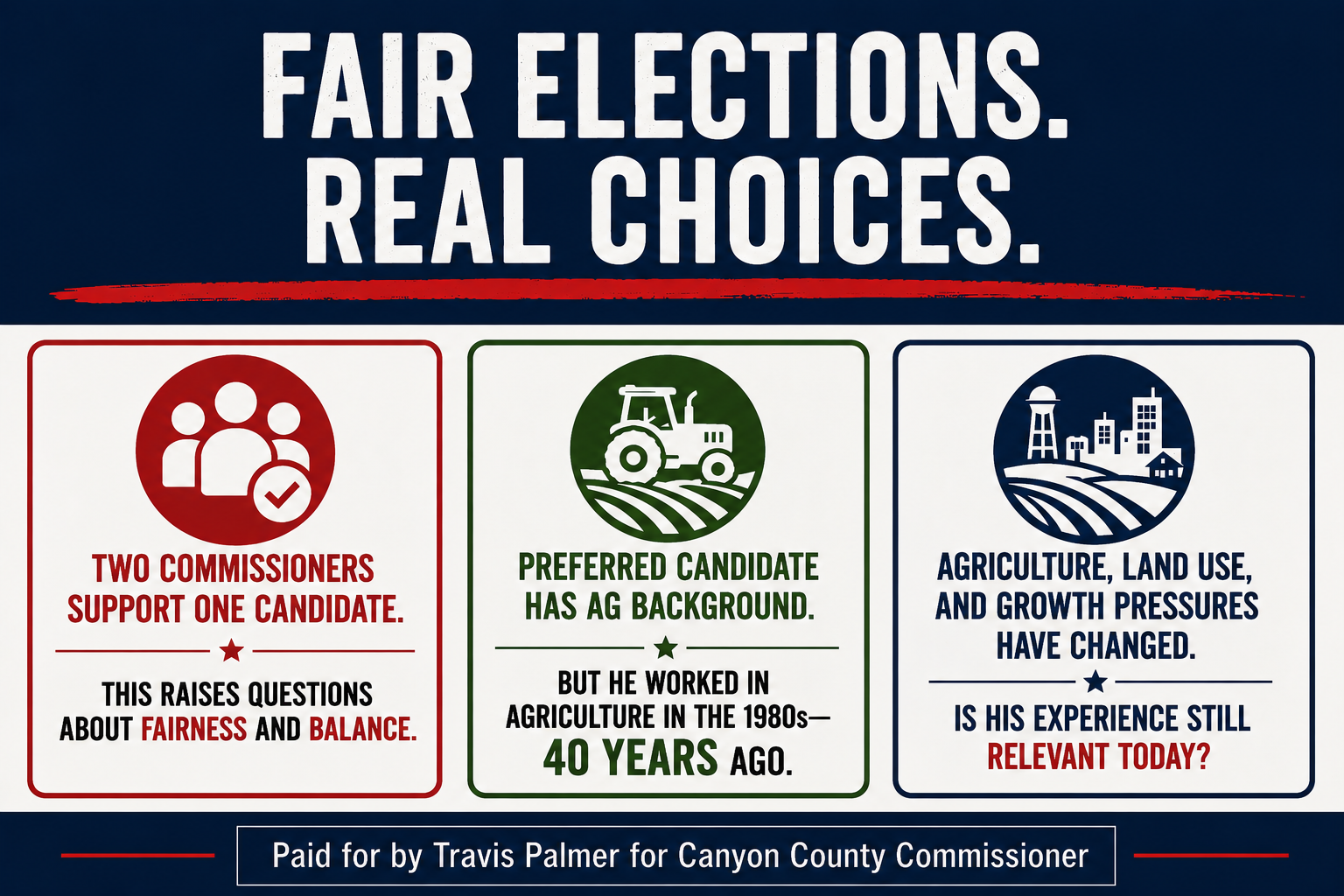
Ever feel like elections are pre-determined?
When two current county commissioners publicly support a single candidate in a contested race, it naturally raises questions about fairness and balance. As one of the other candidates in this race, I believe voters have a right to know about this and to wonder whether this creates an uneven playing field for the rest of the candidates.
The preferred candidate in this race is often presented as having an agricultural background, yet he worked in that industry in the 1980s, four decades ago.
Agriculture, land use, and growth pressures have changed significantly since then, so I think it is reasonable to ask how current and relevant that experience truly is today.
Remember, this is why it’s important to vote in May. Your vote dictates who the candidate will be in November. Vote on May 19th. Make sure to share this post far and wide to let others know.
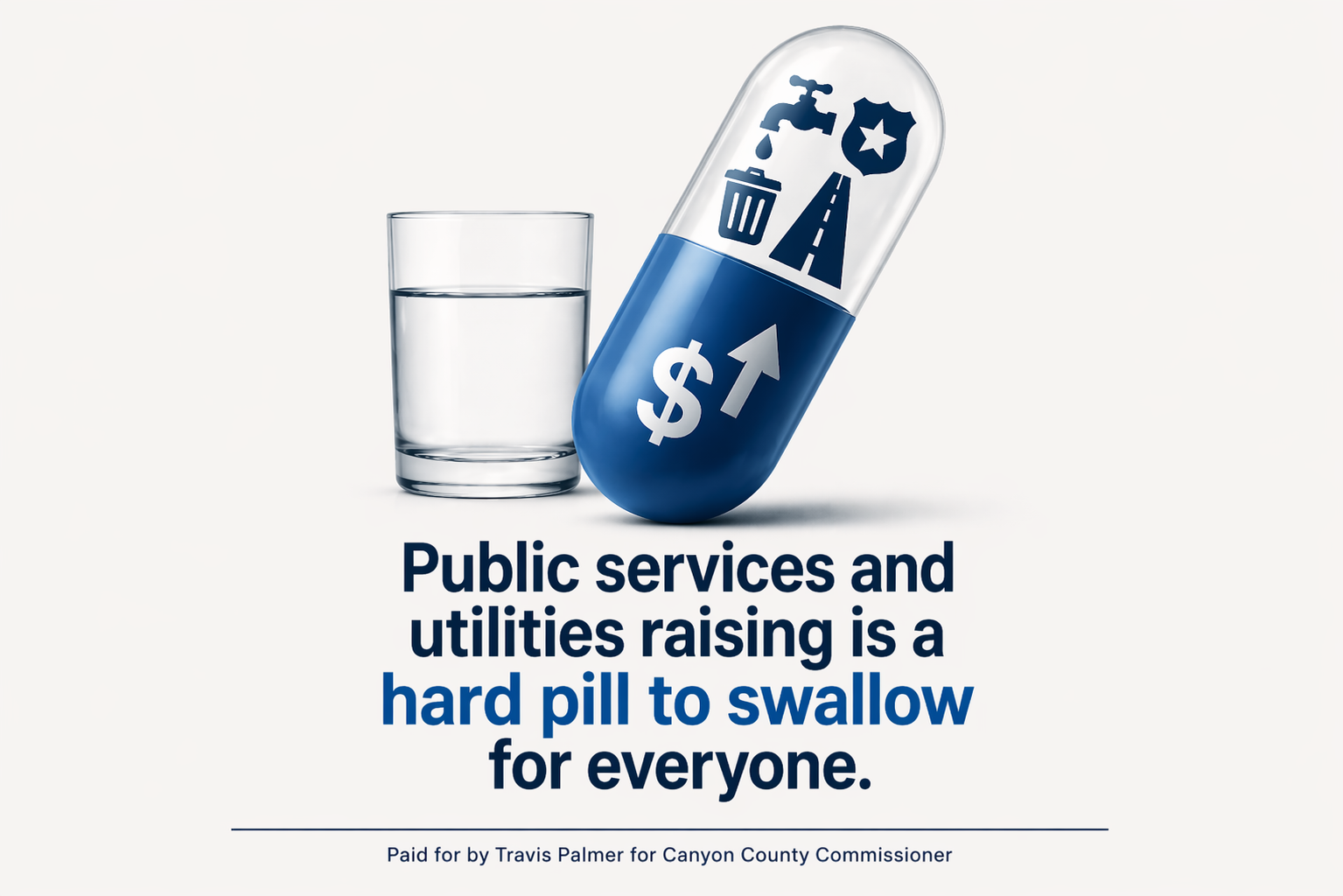
Notice how your utility bills never seem to stay stable?
Notice how utilities seem to be rising? There is a whole chapter in the Canyon County Comprehensive Plan 2030 that talks about public utilities and essential services such as water, sewer, power, and related infrastructure keep pace with growth and are coordinated with land use decisions.
If elected as a county commissioner, here is what I believe needs to happen, we need to focus on aligning infrastructure spending with what residents have already told us matters most: reliable roads, adequate water and sewer systems, and the core facilities that support our quality of life. These are not just line items in a budget; we are all feeling the pressure of public utilities and rising costs. It also means being responsible about how we grow to help with these costs. New development should contribute fairly to the infrastructure it requires so existing taxpayers are not left holding the bill. When we match growth to infrastructure capacity, we protect residents from unnecessary cost increases and avoid the hidden infrastructure deficit that shows up later as higher taxes, bond proposals, and emergency rate hikes. We need to look at impact fee facilities plans, so each development pays in proportion to the impact it actually creates.
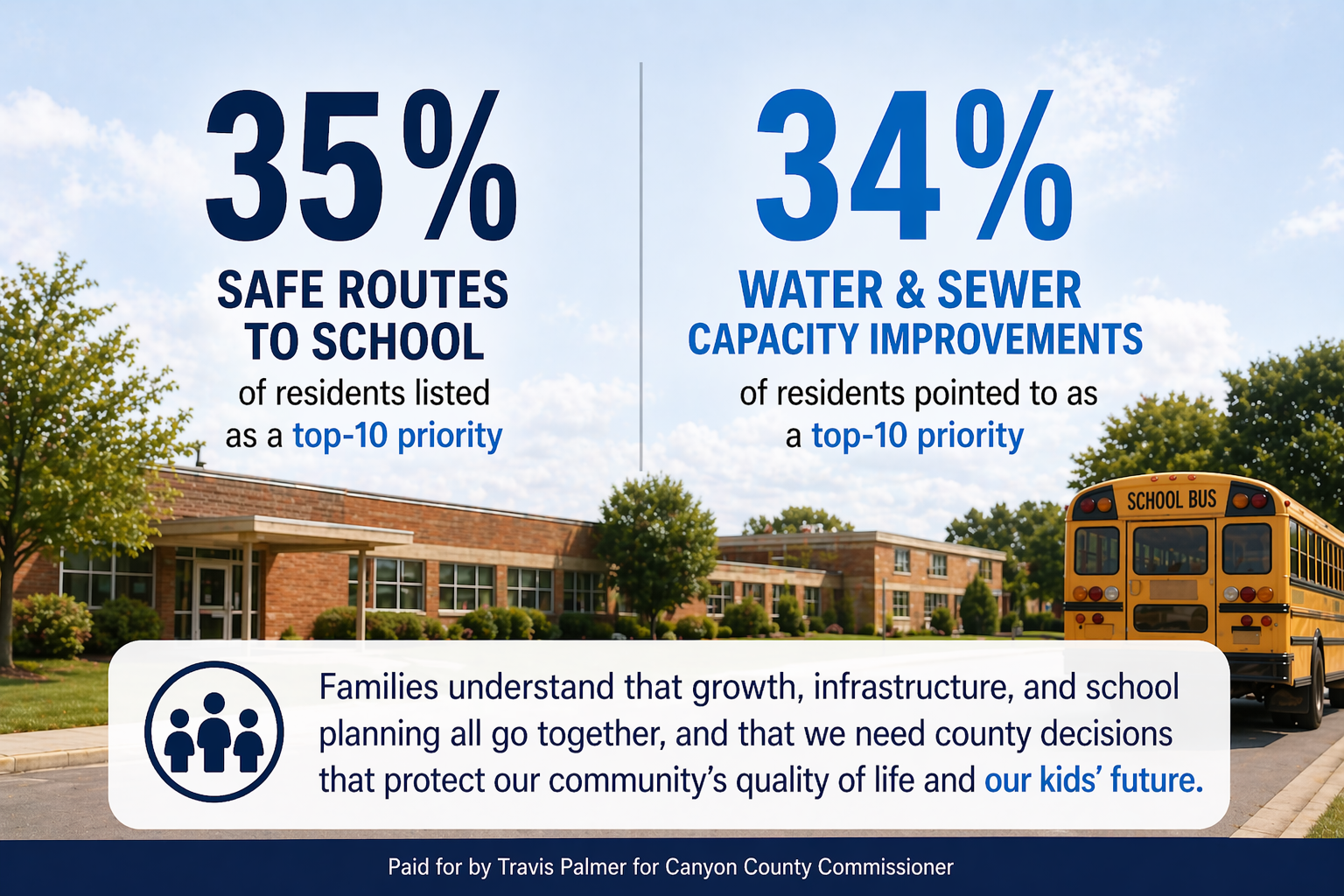
What about our schools in Canyon County?
If I am elected as a Canyon County Commissioner, we must have a plan that starts with listening to the people who live this reality every day. That means communicating with experts in our schools who are the superintendents who understand their districts, teachers in the classroom, and parents who see the impacts on their children in order to understand how growth is affecting them directly. Their insight should not be an afterthought. It should shape our decisions from the beginning.
Finally, remember how much power you have in this process. The May 19 primaries determine about 90% of who will win in November. In many races, the primary decides 100% who shows up on your ballot as the last man or woman standing and that is who you get, with no other choices from that party. If you like what I stand for as a person who is for thoughtful growth, strong schools, and responsible leadership, I would be honored to earn your vote on May 19.

Rezoning: What does that mean for Canyon County growth?
Rezoning decisions are one of the most powerful tools we have to shape Canyon County’s future because they affect growth, traffic, and farmland protection for years to come.
When a property owner asks to rezone land, the county reviews the potential impacts, holds public hearings, and ultimately the Board of County Commissioners makes the final call.
If elected as a commissioner, I’ll work with the other commissioners and consult with experts to make sure the request aligns with our Comprehensive Plan, protects rural roads and schools, and prioritizes farmland over unchecked growth. I’ll ask for real commitments like road and infrastructure upgrades, buffers, and responsible densities before approving changes.
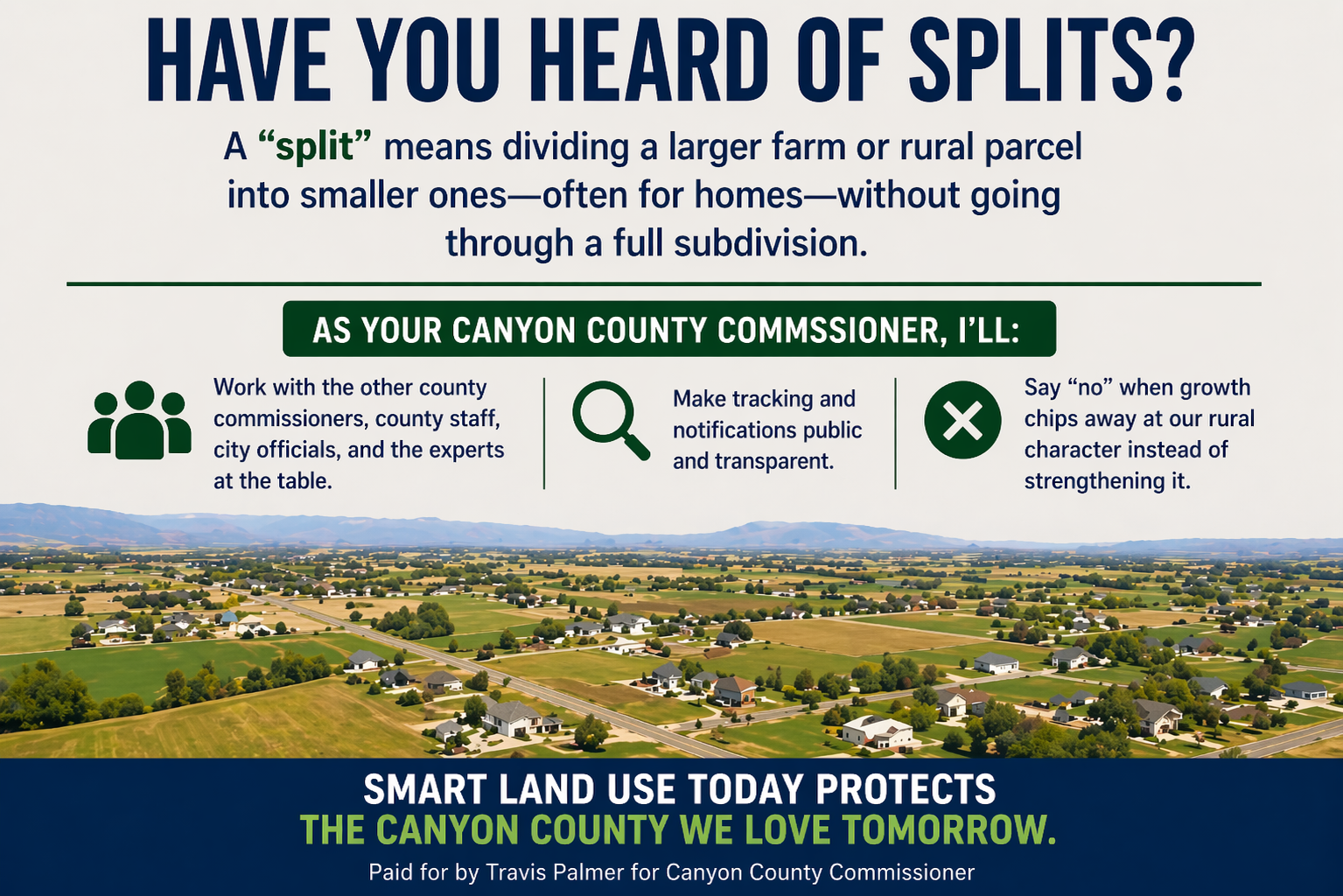
Have you heard of the term “splits”?
Have you heard of splits? A “split” is when a larger farm or rural parcel is divided into smaller ones, often for homes, without going through a full subdivision. Each split might sound small, but together they add up to hundreds of new houses, more traffic on country roads, and less working farmland. Lot splits and subdivisions both play a role in growth, but they’re not the same.
I believe in a balanced approach. We shouldn’t overcomplicate small property decisions, but we also can’t afford unplanned growth that strains our infrastructure and impacts our quality of life. Growth is coming to Canyon County. Our job is to make sure it’s done responsibly, not reactively.
If elected as a Canyon County Commissioner, I’ll work with the other county commissioners, staff, city officials, and the experts at the table to make sure we preserve our heritage while we plan for the future. I’ll ensure the process is public and transparent and say “no” to growth that chips away at our rural character instead of strengthening it. Smart land decisions today protect the Canyon County we love for tomorrow.
Ever heard of Idaho’s Local Land Use Planning Act (LLUPA)?
Ever heard of LLUPA? It’s Idaho’s Local Land Use Planning Act and it’s the law that gives Canyon County Commissioners the authority to approve or deny land divisions, rezoning requests, and comprehensive plan changes that shape where thousands of new homes may go and what farmland is lost.
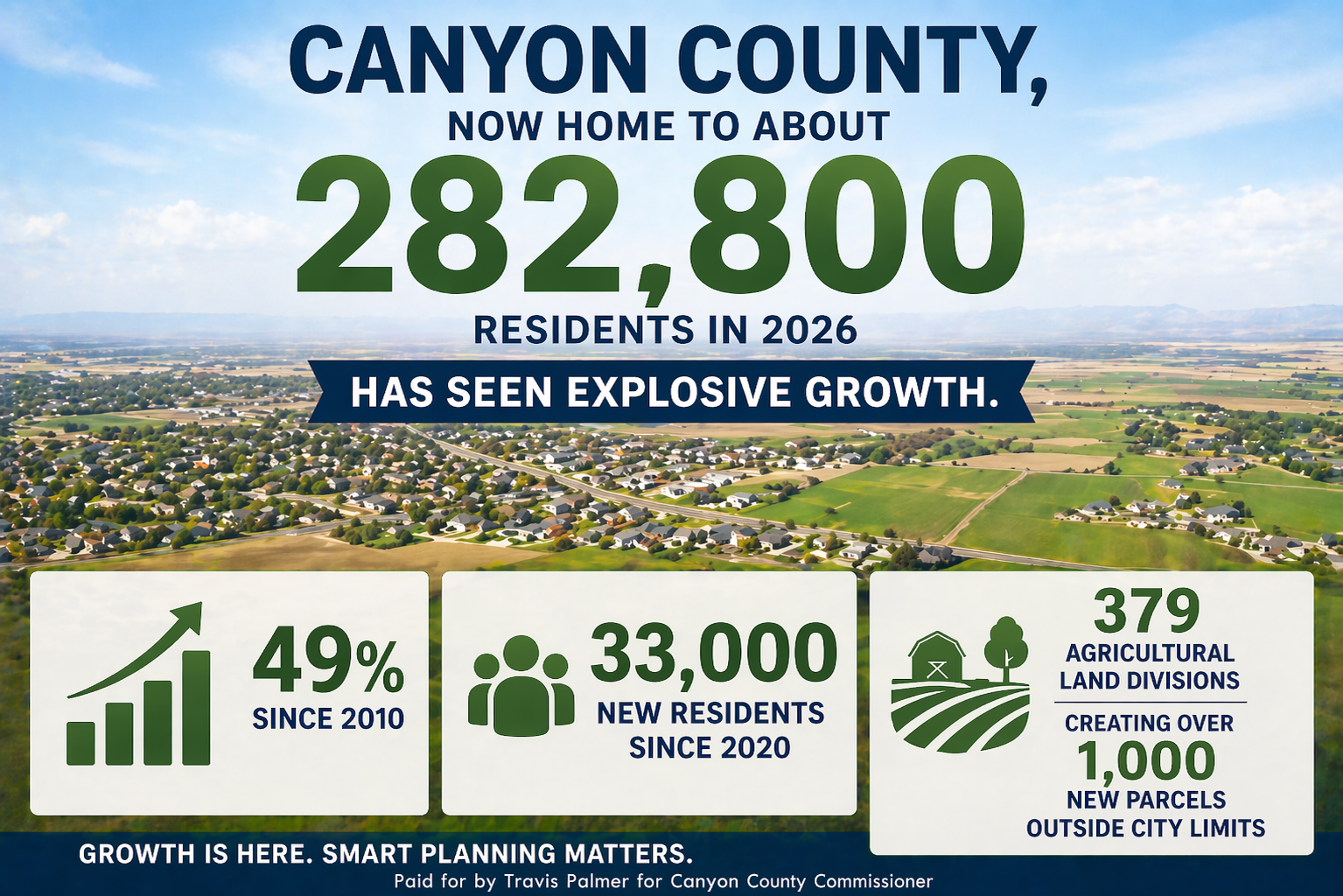
Canyon County, now home to about 282,800 residents in 2026, has seen explosive growth. We’re up 49% since 2010 and nearly 33,000 new residents since 2020, with 379 agricultural land divisions creating over 1,000 new parcels outside city limits.
As commissioner, I will use LLUPA to examine every project and how it aligns with our Comprehensive Plan and community priorities like farmland preservation, safe roads, infrastructure needs and responsible growth. I will work with the other commissioners and county staff to make the process transparent and accessible while using LLUPA as a firm legal foundation to support developments that truly serve Canyon County’s long‑term vision.
Growth in Canyon County: Good or Bad?
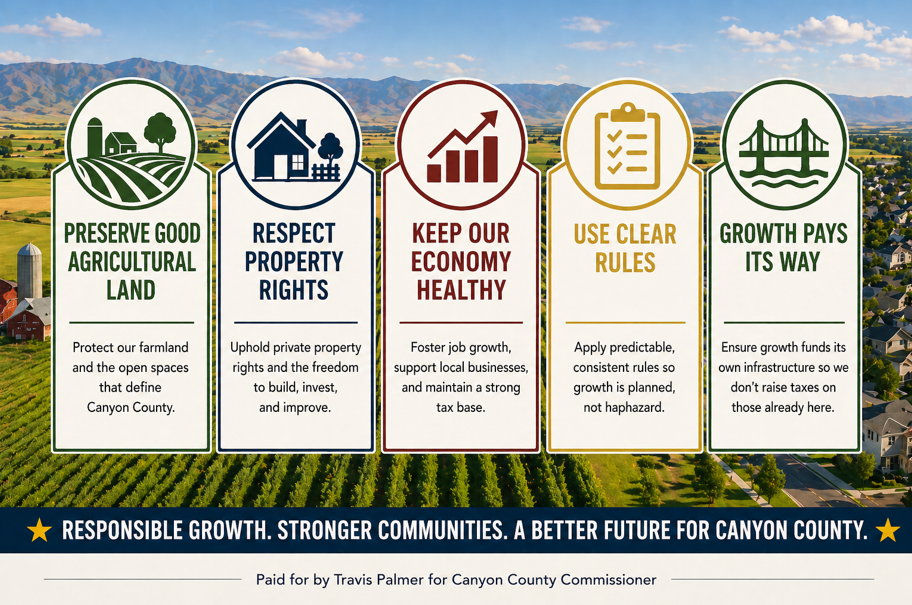
Growth in Canyon County: Good or Bad? What are your thoughts on sprawl, responsible growth, infrastructure concerns?

Bringing People to the Table: How this applies to being a full-time Commissioner for Canyon County
In practice, County Commissioners spend much of their time in public meetings managing budgets, hearing land-use and zoning issues, and responding to citizen concerns about county services. Commissioners also serve as liaisons to specific departments and outside entities to keep oversight and communication organized.
Concerns from Canyon County Citizens - Reflection from Campaign Banquet
From growth and traffic to farmland preservation and community values, Canyon County residents are speaking up about the issues.
Campaign Kick-Off Banquet - Real Reasons to Attend
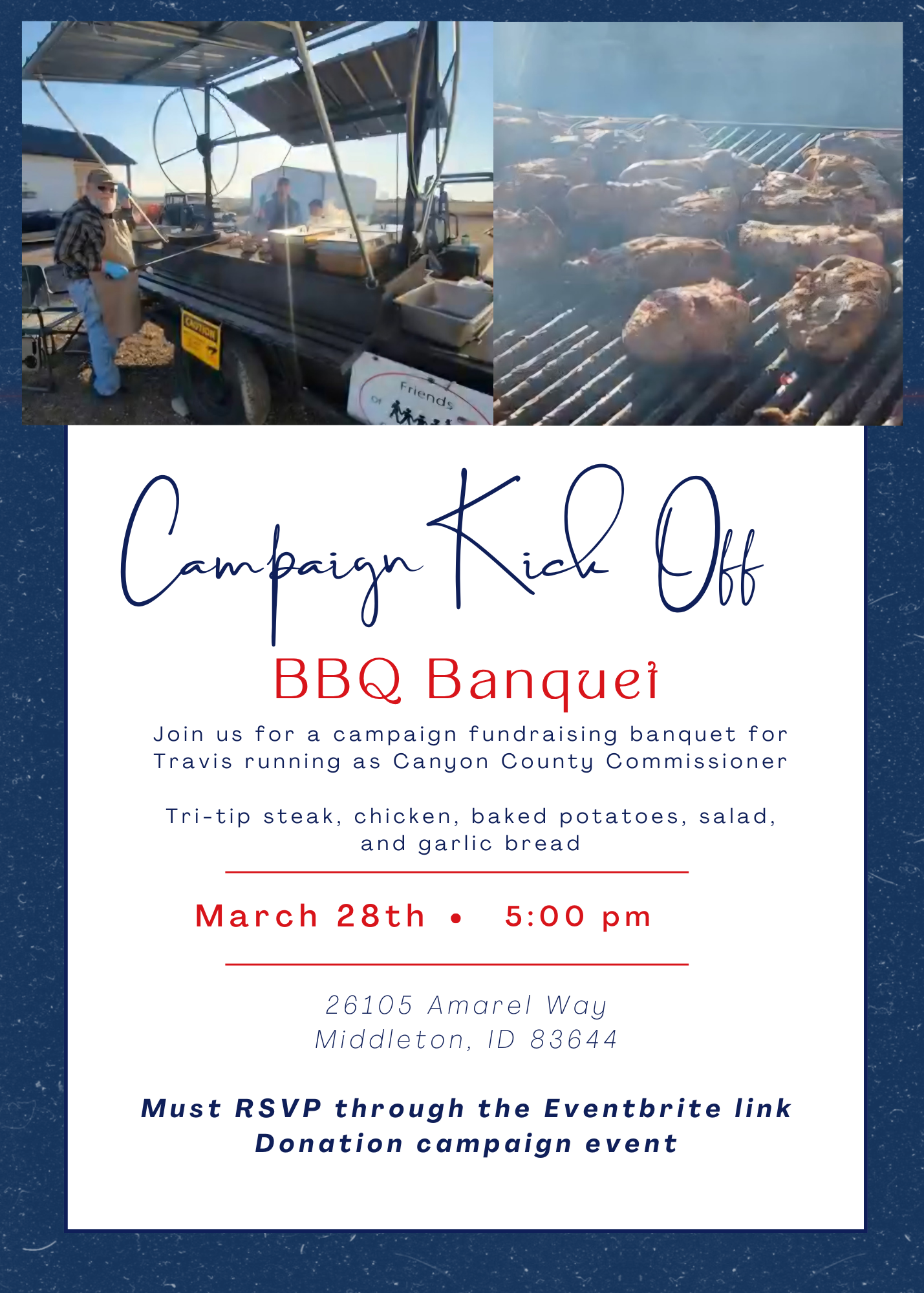
Join me for a BBQ banquet to meet face-to-face, ask questions, and talk about the future of Canyon County. Donations are appreciated but just come and have real conversations.

Why am I running for Canyon County Commissioner?
Why Travis Palmer is running for Canyon County Commissioner and his plan for protecting farmland, responsible growth, and strong infrastructure.